Showing posts with label sadlers wells. Show all posts

Friday, 8 March 2024

Dance: Pushing forward

New York City Ballet: Mixed Bill
Sadler's Wells, London • 7-10.Mar.24 ★★★★

Displaying skills at the very peak of the artform, the New York City Ballet continues to blend a reverence of classical forms with modern touches. So this mixed bill is packed with moments that feel surprising and even thrilling as they subvert expectations. This is a spirit-lifting programme featuring four distinct pieces...

Rotunda
choreography Justin Peck
music Nico Muhly
dancers Megan Fairchild, Miriam Miller, Jacqueline Bologna, Sara Adams, Indiana Woodward, Unity Phelan, Daniel Ulbricht, Victor Abreu, Adrian Danchig-Waring, Sebastián Villarini-Vélez, Jules Mabie, Gilbert Bolden III
conductor Andrews Sill

First up is Justin Peck's jaunty gathering of 12 dancers wearing colourful practice garb, floating in shapes together and separately, echoing each other and then shooting off individually as if they are in a rehearsal jam session. It's expressive and fluid, with an almost weightless, bouncy sensibility that reveals the dancers' lyrical athleticism. Further impressive sequences include duets, solos and more group numbers, all held together with the buzzy choreography and bright music, performed live by an orchestra. Most powerful is the connection we feel between the dancers as they spin around each other, revealing a camaraderie that adds to the impact of the piece.

Duo Concertant
choreography George Balanchine
music Igor Stravinsky
dancers Megan Fairchild, Anthony Huxley
piano Elaine Chelton • violin Kurt Nikkanen

There's an instant cheeky sense of interaction between two musicians and two dancers on-stage, as Stravinsky's music starts things off before the physical movement begins. Balanchine's choreography still feels fresh and inventive, revealing beautiful lines, big emotions and engagingly expansive expressions. As these two gifted dancers spiral around the stage, they continually offer humane touches that bare their souls, with added moments of wit, emotion and dazzling footwork. Throughout the piece, they return to the piano and violin to get lost in the music, regroup and set off again. It culminates with a lovely black stage illuminated with action in tiny spotlights.

Gustave Le Gray No 1
choreography Pam Tanowitz
music Caroline Shaw
dancers Naomi Corti, Adrian Danchig-Waring, Ruby Lister, Mira Nadon
piano Stephen Gosling

The piano remains on-stage, as four performers appear dressed in red, with floaty drapes over full-body suits. Once again, there is interaction between the musician and the dancers, but this has a more technical feel to it, choreographed to focus on movement and shapes rather than deeper emotions. It's beautiful, with fascinating touches and some wonderfully cool moments. It's also rather self-conscious in the way it plays out, revealing impressive skill without deeper emotionality. The highlight is a wonderfully absurd sequence in which the dancers push the piano across the stage, and the pianist doesn't miss a note. 

Love Letter (on shuffle)
choreography Kyle Abraham
music James Blake
dancers Olivia Boisson, Jacqueline Bologna, Naomi Corti, Christopher Grant, Emily Kikta, Ruby Lister, Malorie Lundgren, Jules Mabie, Alexa Maxwell, Roman Mejia, Mckenzie Bernardino Soares, Taylor Stanley, Quinn Starner, Kennedy Targosz, Peter Walker

Ending on a high, this final piece is a wonderfully engaging mix of classical ballet moves with modern dance and hip-hop. The performances and choreography are often exhilarating, accompanied by soulful music that continually reveals new textures. This is a visceral piece that unfolds in a series of terrific variations in pace, creating an expressive, intriguing dreamlike atmosphere that's infused with life and humour. The movement is luxuriant, performed with serious strength while the 15 dancers allow their personalities to emerge in their interaction. With clever costumes that feature theatrical flourishes, and colourful lighting that adds textures to the floor, this is a lovely collection of impressive solos, romantic duets and buoyant group moments, coming full circle with Joy Division's Atmosphere.

For information: SADLER'S WELLS >

photos by Erin Baiano & Paul Kolnik • 7.Mar.24


Friday, 13 May 2022

Stage: Let's get wild

Wild Tango
director-choreographer German Cornejo
dancers German Cornejo, Gisela Galeassi, Ezequiel Lopez, Maia Roldan, Edgar Luizaga, Nicolas Schell, Pamela Pucheta, Isaac Gardella, Leonardo Luizaga, Alex Bogado, Juan Segui, Jonathan Lazarte, Nelson Leiva
musicians Ovidio Velazquez, Luciano Bassi, Matias Rubino, Jeronimo Izarrualde
sets and lighting Marius Arnold-Clarke
Peacock Theatre, London • 12-21.May.22

Seriously gifted dancers and musicians bring an exuberance to this show that keeps the audience on-side even though there are some issues with lighting, costumes and choreography. The show's director and lead dancer German Cornejo deliberately blazes a modernising trail for the Argentine tango, harking back to its roots as a social dance for working-class male couples while pushing it forward into present-day musical genres. But it feels like a missed opportunity to connect tango's same-sex history with today's gender-blurred culture.

The show opens with a burst of feisty energy as 10 men and three women fire off a series of rapid-paced tango manoeuvres across the stage, then move into a series of more focussed performance pieces that blend traditional steps with new ones. Frustratingly, the costumes distract from the dancing, as the men are dressed in black harem pants (not gaucho pants as seems intended) that obscure their legs. And the leather corsets and straps feel oddly cliched. Several moments feature men dancing together with real power, especially when flame-haired firecracker Juan Segui is on the stage. 

But rather than embracing the tango's androgynous qualities, the costumes and choreography emerge through a male gaze. The men circle around in the direction of the women, who are dressed in skimpier outfits that at least highlight their extraordinary legwork. And the lighting doesn't help, shining from the top or side on black-clad performers on a black stage. Even so, there's a pulsing energy that's undeniable, and moments of energetic scrappiness that add a whiff of danger. 

Everything switches up a gear after the interval, with a triumphant opener in which everyone is on-stage wearing day-glo jumpsuits while the astonishing vocalist Luciano Bassi takes his place at the front of the stage to lead the charge. From here on, brightly coloured costumes echo a musical shift, weaving traditional styles into storming anthems, pop rock and even a hint of metal. And the choreography is more impressive because we can see the performers more clearly, even if a few of the costumes are downright inexplicable. 

A few numbers along the way incorporate aerial aspects; these look very cool but feel under-planned. And the moving scaffolds are also under-used. Meanwhile, the excellent band gets two numbers on their own in the second half, which seems odd for a dance show, and basically means that Bassi ends up stealing the show. That said, there are moments all the way through this production that take the breath away, simply because these dancers are the very best at what they do. And the way they inject tango touches into such a wide variety of dance styles is seriously impressive.

photos by Leo Mason • 12.May.22

Thursday, 17 February 2022

Stage: You should be dancing

Saturday Night Fever
dir Bill Kenwright
choreo Bill Deamer • design Gary McCann
stage adaptation Robert Stigwood, Bill Oakes
with Richard Windsor, Olivia Fines, Melody E Jones, Phillip Aiden, Marios Micolaides, Jasmin Colangelo, Kevin O'Dwyer, Paul French, Faizal Jaye, James Brice, Micharl Cortez, Tosca Fisher, Ashley Luke Lloyd, Celeste Zollino
Peacock Theatre, London • 4.Feb-26.Mar.22

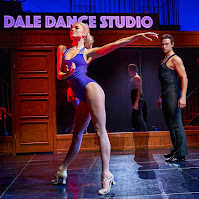
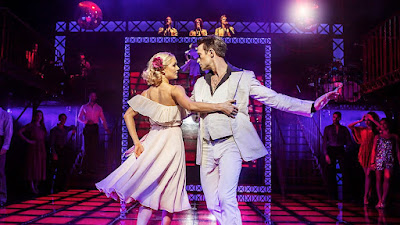
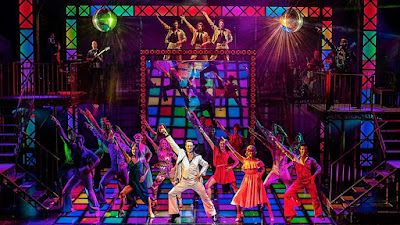
A riot of lights, colour, great music and stretchy fabrics, this massively engaging stage show takes the audience back to the 1970s disco heyday with a lot of style. Even the story's darker turns can't stop the large ensemble cast's boundless energy as they strut their stuff on the Peacock's almost comically glammed-up stage.

Set in 1977 Brooklyn, the show centres on Tony Manero (Windsor), a gifted dancer from a working class background who lives for the chance to get up and boogie each weekend at a local nightclub, where all the girls know his name and his group of childhood buddies is never far away. Then he hears about an upcoming dance competition, and he dumps his current partner Annette (Colangelo) for mysterious pro-dancer Stephanie (Fines). But his focus on Stephanie strains his relationships with his family and friends.

The plot takes some darker turns along the way, both in slightly under-developed side-stories and a major gang clash that adds a violent dance-style streetfight. All of this is staged with hugely expressive choreography, sending characters in constant motion around the multi-levelled stage. And while the darker drama and a steady stream of sharp comedy add plenty of texture, it's the dancefloor sequences that bring the show to pulsating life. Frankly, the performers' stamina is astonishing.

Costumes are a wondrous sea of doubleknit trousers, polyester shirts and nylon chiffon skirts (no doubt rendered in kinder fabrics to protect the dancers from melting down). And the lighting is fabulously lurid, with lots of glitter balls and underfloor illumination reflected in a huge on-stage mirror. And with some 20 dancers on-stage, the group choreography is downright jaw-dropping: fast and complicated, mixing all of the favourite disco moves with moments of ballet and ballroom.

The audience can't help but applaud the Bee Gees (Luke Byrom, James Hudson and Oliver Thomson) when they first emerge to oversee everything from above. There are also songs from the group's earlier and later work woven into the show alongside the iconic Saturday Night Fever setlist. And key cast members get to belt out a number themselves (Fines steals the show with What Kind of Fool). So while the plot itself sometimes feels a little harsh, the point is that there's always the weekend coming to let off steam. When the dancers return to their formations, striking poses in rapid-paced gyrations, we can't help but wish we were up there sweating with them.


For more information, click HERE 

photos by Paul Coltas • 17.Feb.22


Wednesday, 24 November 2021

Stage: Gods and monsters

AKRAM  KHAN COMPANY: CARNIVAL OF SHADOWS
Outwitting the Devil
choreographer Akram Khan
dramaturg Ruth Little
writer Jordan Tannahill
dancers Mythili Prakesh, Luke Jessop, Jasper Narvaez, James Vu Anh Pham, Elpida Skourou, Francois Testory
composer Vincenzo Lamagna
Sadler's Wells • 23-27.Nov.21

There's an intense mythological sensibility to this piece by Akram Kham, which features six dancers with distinct physicalities wrestling with their destiny on a set that feels like an epic arena. It's a vividly involving show that will mean different things to each audience member, evoking a wide range of emotions as the characters grapple with each other. The performances are staggering, blending a range of demanding movement together to often exhilarating effect.

The scene emerges from the darkness, with figures on an empty black stage surrounded by blocks of various sizes. This creates the sense that we're outside time and space, watching gods and goddesses attempting to make sense of their own identities and responsibilities. As the movements evolve, characters begin to emerge. Some people are clearly in control, driving the action and provoking responses. Others are more passive or nurturing. At the centre is a woman who takes on a Mother Earth presence, and the others cower before her.


Performed at full energy by the talented dancers, the movement is absolutely breathtaking, occasionally resolving into glorious tableaux that look like illustrations from an ancient book. And the soundscape is composed by Vincenzo Lamagna to blend music and voice in ways that cut straight into the gut. Created workshop-style, the piece mirrors the saga of the Sumerian hero Gilgamesh, who rescued a goddess, revolted against an overlord and defeated monstrous giants. Indeed, echoes of these legends are woven into the expressive choreography, which features flares of violence, compassion, lust and curiosity.

Like reading a poem or getting lost in an intricate painting, Outwitting the Devil is a piece that needs to wash over the audience without explanation. It's loaded with primal imagery that taps into the subconscious, revealing elements of humanity in strikingly unusual ways. It's also remarkable because of how difficult it is to describe in any real detail. Just see it if you get the chance.

photos by Jean Louis Fernandez • 24.Nov.21

~~~~~~~ ~~ ~~~ ~~~~
Young Associates: Mixed Bill
Lilian Baylis Studio, Sadler's Wells • 23-24.Nov.21

Landscape With Flying Man
choreographer-composer Magnus Westwell
movement artists Connor Scott, Konrad Plak, Max Cookward

Magnus Westwell plays with images of masculinity in this gripping and seductively sweaty piece, which features three very fit male dancers with bare chests spinning together and apart in various beams of light. They emerge at the start as a single being, perhaps as the body, mind and spirit of a bird-like man with what becomes an astonishing wingspan. Then they separate and regroup in different formations, working both together and against each other in deliberate, physically demanding movements that are beautifully choreographed and performed. And it's their interaction that creates moving moments along the way.

When Life Gives You Melons
choreographer Vidya Patel
dancers Aishani Ghosh, Tulani Kayanı-Skeef, Nandita Shankardass, Chandenie Gobardhan
composer Sarathy Korwar

Taking on a big theme, Vidya Patel uses an introductory film clip to comment on the issue of infanticide in South Asia, where boy babies are preferred over girls. Then four female dancers appear, pantomiming their daily activities to explore the feelings they are experiencing. As the performance continues, this evolves into increasingly complex choreography, emerging as a celebration of feminine energy, with a climactic view of women as goddesses. The narrative arc is vividly well crafted and played, mixing lyrical movement with clever lighting and sound to offer a powerful final kick.

I Wonder If You Know What I’m Talking About
choreographer Olive Hardy
dancers Annie Edwards, James Olivo
composer Samir Kennedy

There's an engaging loose-limbed feel to this piece, which Olive Hardy sets out as an improvised dance for two people with distinct physicalities. They travel around the stage in ways that feel aimless, only interacting tangentially; the kinetic Edwards uses sharp movements while the much taller Olivo remains rubbery. Each is in possession of some sort of cushion, which they wrestle with in a variety of ways, expressing emotion in unexpected places. It's physically impressive, a fascinating and unpredictable display of dancing skill. But thematically it feels rather opaque. 

This Is Not a Penguin
concept-creation John-William Watson
performers Beth Emmerson, Heather Birley

Taking inspiration from cinema, John-William Watson maintains a wonderfully witty tone in this piece, which has an offbeat narrative that's set in a research station in Antarctica. There a scientist and her shadow pace in circles around a desk and chair, using clever repetition to establish patterns and then break them. They also drop in amusing dance moves, which are performed with deadpan humour and augmented by some very clever shifts in lighting, including superb moments of shadow play. The soundtrack features a terrific variety of audio clips, including snippets from Werner Herzog's wonderfully unhinged Antarctica documentary Encounters at the End of the World.

photos by Camilla Greenwell • 23.Nov.21

Saturday, 18 September 2021

Performance: A field in England

Is This a Waste Land?
by Charlotte Spencer
presented by Sadler's Wells
narration Louise Tanoto, Ben Ash
with Kirsty Arnold, Ben Ash, Rachel Lopez de la Nieta, Ben McEwen, Thomas McKeon, Petra Soor
Bridgewater, Queen Elizabeth Olympic Park • 17-26.Sep.21

What's described as an "immersive performance through headphones" is actually quite a lot more than that, as it puts the audience right in the middle of the show. We work alongside the artists to create everything that happens, while audio input encourages us not to miss the deeper personal meanings. So taking part is fascinating, unexpected and moving.

The event takes place in East London at the end of the day, as the sun sets over the City. We're standing in a disused open space, paved over as a car park perhaps for the Olympics nearly a decade ago and abandoned shortly afterwards. And with the construction going on all around the Olympic park in Stratford, it's obvious that developers have their eye on this piece of land, so the chance to roam around it is specific to this time.

Entering the site, we're given workman's gloves and headphones, and told to select an object to carry with us from a collection of broken, thrown-away things. A pin cushion seemed to shout out at me from my childhood, so that's what I picked up. Headphones on, the 50 or so people are guided to create a perimeter on two sides of the lot, then to walk into the middle, stop, turn, walk some more and have a good look, selecting a spot to place our object.

Soon things get much more complicated, as we are encouraged to explore areas of interest, to walk in specific directions, spin around and move. Eventually it becomes clear that not all of us are getting the same instructions, as we wave arms to form a smaller tribe that is given a specific job. My team uses found objects to create rope-and-stick fences and to build more elaborate walls. Others are carrying long sticks or constructing towers. As a whole group, we come together and split apart, form a huge circle, lounge on the ground watching a performance above us, walk under a floating sail, and end up with hot chocolate and biscuits around a fire as the darkness creeps over us.

Through all of this, the cast members both blended into the group and carried out their own busy work, enabling our projects while also putting on a beautifully physical dance performance of their own. Being involved in this was sometimes experiential overload. Occasionally the instructions were unclear, creating confusion that was resolved by relying on teammates. Some of the stop-and-look moments felt indulgent, but they offered a chance to breathe and consider the large scale of what was happening before the next activity. And in the end there was a hushed sense of participatory accomplishment. The meaning might be opaque, but it's also distinct for each person involved. And the cumulative feeling is powerful.

Photos by Pari Naderi and Beth Chalmers • My own pics are in the Instagram post below.